Titanium base abutments have increasingly been utilized in implant dentistry due to their strength, durability, and biocompatibility. Dental professionals need to be aware of the potential for issues. This includes screw loosening and excess cement around the implant soft tissue that can occur with titanium base abutments. Through advancements made in digital workflow technology combined with CAD/CAM fabrication processes these titanium products are becoming more precise which is adding to improved satisfaction from patients on a longer-term basis.
As research continues to optimize the use of titanium-based abutments, patients and dental professionals need to remain informed to achieve successful outcomes.
What is the Titanium Base Abutment?
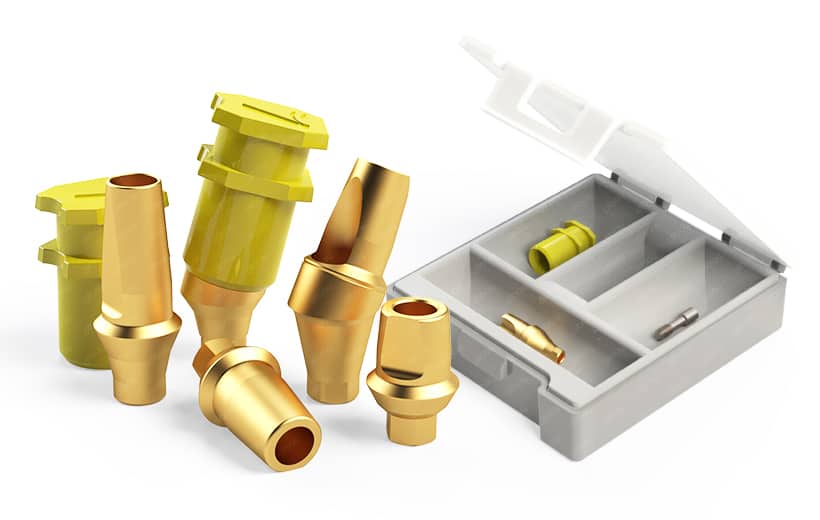
Titanium base abutments serve as an essential connection between dental implants and their restorations. Using titanium implants
The healing abutment is a crucial component that assists the post-implantation healing process. This modest device ensures the success of dental implant procedures.
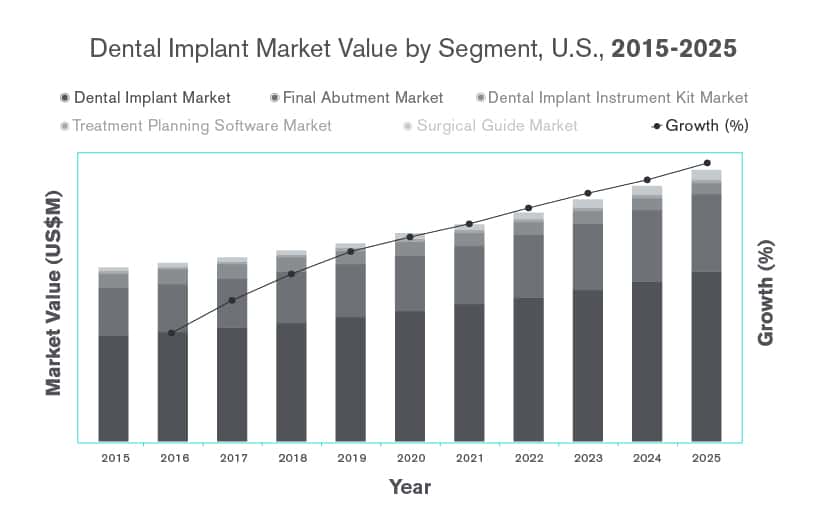
The dental implant market was valued at $4.38 billion in 2018 and has been projected by several economic reports to reach upwards of $8 billion by 2026
Are you buying the right products and in the proper quantities? Are you paying a fair price for them? Do you have your purchasing spread too widely across a variety of suppliers?
** Disclaimer: Registered trademarks are owned by their respective companies and there is no commercial relationship with the Edison Medical™ brand. Its mention is made for proper identification purposes of the dental implant with which the Edison Medical™ abutments can be used. Please see EM Implant disclaimer.